


Contact
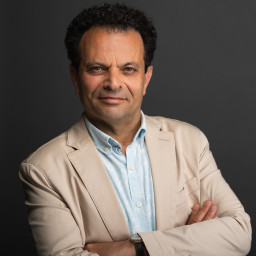
Sharog Heshmat Manesh
Email : info@sharogheshmatmanesh.com
About
Sharog Heshmat Manesh studied Sociology from 1988 to 1996 and Philosophy of Art and Culture from 1992 to 1994, both at the University of Amsterdam. Since 2006, he has worked as a (senior) researcher and lecturer at the Amsterdam University of Applied Sciences. In 2009, he received the Challenging Diversity Award from Zestor, the labor market and training fund for universities of applied sciences, and ECHO, the Expertise Centre for Diversity Policy. He received his PhD in 2022 from LUCAS, Leiden University Centre for the Arts in Society, and in 2024 his doctoral research was nominated for the prestigious dissertation prize of the Boekman Foundation.
Much of Heshmat Manesh’s work is connected to his personal history and its relationship to socio-political relations and sociocultural contexts. As a cultural sociologist, he focuses on issues of cultural identity and migration. This led to the central theme of his doctoral research: cultural citizenship. In addition to research on Western societies, he regularly analyzes Iranian society. A significant part of his work on Iranian society concerns political and cultural relations, with a central focus on the social movement between modernity and tradition over the past 150 years.
In 1997, he published Zoon van de zon (Son of the Sun), a history of Iranian cinema from 1904 to 1996. His research led him to discover that the collaboration between modern literature and film in the 1960s contributed to the emergence of Iranian intellectual cinema. In 2008, he published Mijn wereld in Amsterdam (My World in Amsterdam) and, in the same year, the book Iran. In the latter, he analyzes the renewed emergence of political reformism in Iran and argues that when traditional political ideologies reach an impasse, the call for modernity grows stronger. Conversely, when modernity appears to reach an impasse, the call for traditional ideologies grows stronger. Iran is characterized by an incomplete transition from tradition to modernity. In 2010, together with other researchers, he published the research report Dialoog, jongerenwerk en homoseksualiteit (Dialogue, Youth Work and Homosexuality) for the knowledge center of the Amsterdam University of Applied Sciences. A year later, he produced the Dutch translation of a series of poems by Ahmed Shamlu, titled Opstandige dauw (Rebellious Dew). Shamlu’s poetry is characterized by social engagement.
In 2022, he published his doctoral dissertation with SWP Publishers under the title Balanceren tussen publiek en politiek (Balancing Between the Public and Politics). A year later, his book based on photographic research, Herken jezelf in de foto (Recognize Yourself in the Photograph), was published, also by SWP Publishers. In it, he analyzes the plurality of cultural identity formation among young people in metropolitan regions. He also regularly publishes articles, including “Vriendschap in de multiculturele samenleving” (“Friendship in the Multicultural Society”) in Eutopia in 2006; “Allochtonen als experts tijdens de kredietcrisis” (“Immigrants as Experts During the Credit Crisis”) in On File in 2008; “Lusten en Lasten van het Thuisgevoel” (“The Benefits and Burdens of the Feeling of Home”) in Eutopia in 2008; “Hedendaags cultureel burgerschap” (“Contemporary Cultural Citizenship”) in De Helling in 2018; and “Migrantenpodia spelen een rol in cultureel burgerschap” (“Migrant Platforms Play a Role in Cultural Citizenship”) in Cultuur+Educatie in 2023.
In addition to his publications, in 2011 he made the documentary Dochters van Malakeh (Daughters of Malakeh) together with filmmaker Jet Homoet, offering an insightful view into the divided Iranian society. He also works as a cultural advisor for cultural funds and on cultural policy for municipal institutions, and serves as a committee member evaluating educational curricula for higher professional education (HBO) programs in the Netherlands.